
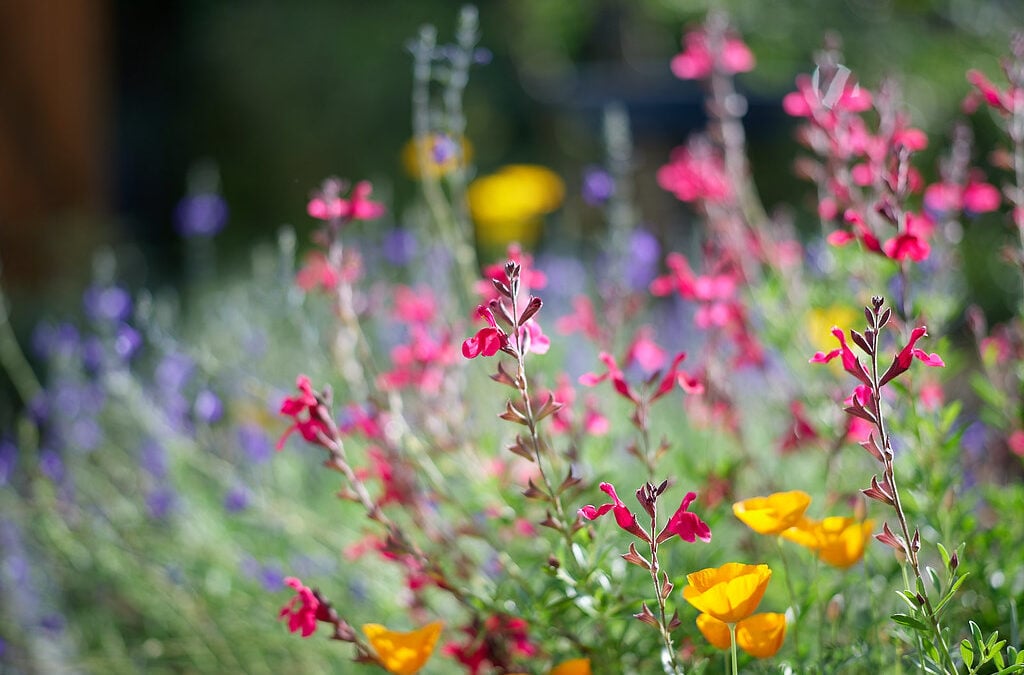
I’m so grateful to have divided some of my existing perennials and re-planted them in other appropriate spots in the garden this last week before our much-needed, three day rain episode here in Central Texas. Dividing perennial plants and spring flowering bulbs is at the top of my Fall gardening list!
As far as hard work goes, Fall is the busiest gardening month to ensure less weeds, healthier plants, and an abundance of flowers for next spring and summer. I’m always looking ahead to improving my gardening skills. If I would just do the same hard work to enrich my life!
Anyway, here are my top priority gardening tasks for hoped-for better future seasons.
1. Divide existing, flourishing, perennial plants and bulbs. Use a sharp old carving knife to slice the root balls in sections. Spread the love and replant in other spots. Be sure to enrich new spots with compost. I prefer my own home-grown compost and usually have at least one barrel full ready to use. You can also adapt this method of multiplying nexts year’s plants with nursery-bought selections. It’s best to plant perennials in the fall and your local nurseries should have an adequate supply.
2. Mulch, mulch, and mulch some more! Two to three inches of mulch covering all of your beds will not only protect your newly planted gems, but will also encourage soil enrichment for all your plants, even if you’ve chosen to keep selective spots fallow. I do not buy mulch, but instead, vacuum and shred readily available leaves at this time of year. I even knock on strangers’ doors if I see they have full paper gardening refuse bags lined up for trash pick up in front of their homes. It never hurts to ask!
3. As you’re pruning old growth, be sure to collect spent blooms resplendant with dried seeds. Keep a few stalks on the plant for extra bird food in the winter. They will thank you! I store my seeds in labeled paper lunch bags, and file them away in baskets for spring sowing. If not completely dried, I cut stalks and tie into bunches. I then put them head down in old pillowcases, secure the tops with sturdy twine, and hang them up in my garden shed or garage for the winter. The seeds will fall to the bottom of the pillow cases and are then easy to see and collect for next year. The pillow case method works well with larkspure, gomphrena, poppies, and zinnias.
These are the top three items on my October gardening to-do list. Have fun playing in the dirt!
Did you give p on gardening this summer?
Don’t be misled: No one makes a fool of God. What a person plants, he will harvest. The person who plants selfishness, ignoring the needs of others – harvests a crop of weeds.All he’ll have to show for his life is weeds! But the one who plants in response to God, letting God’s Spirit do the growth work in him harvests a crop of real life, eternal life.